Role: Workshop Designer & Facilitator
Timeline: May - June 2019
Location: Sao Paulo, Brazil (Associacao Acaia)
Team: Jennifer Low, Colleen Clark, Ashley Moon, Megan Freund, Roland Graf (Faculty lead)
Methods: Participatory sensemaking, Arts-based research, Youth-led visual methods, Video ethnography
Tools: Kite-mounted cameras (pipa vista), Shoe-mounted cameras (pe da vista), Adobe Premiere Pro
Watch video from the project here.
About
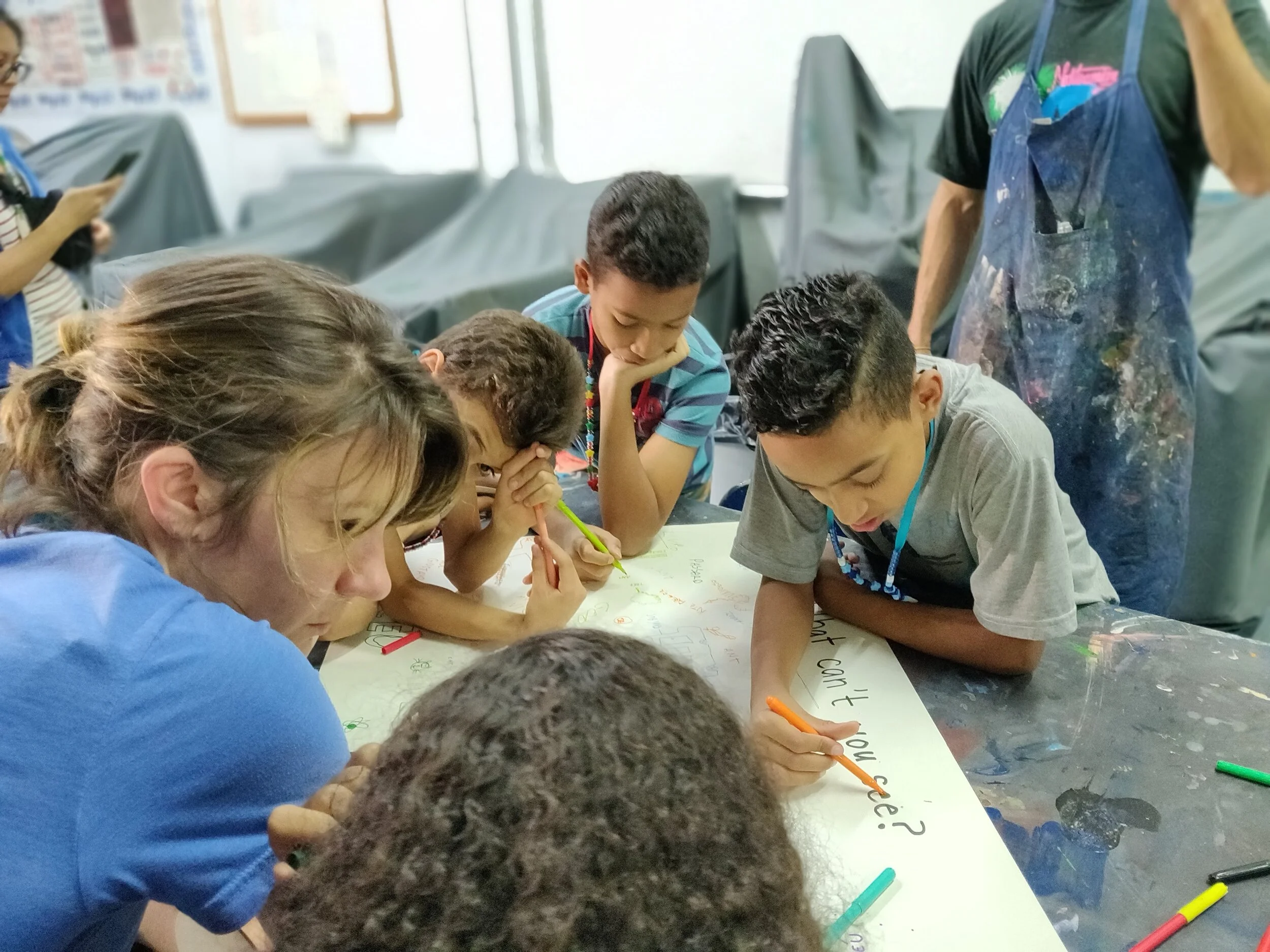
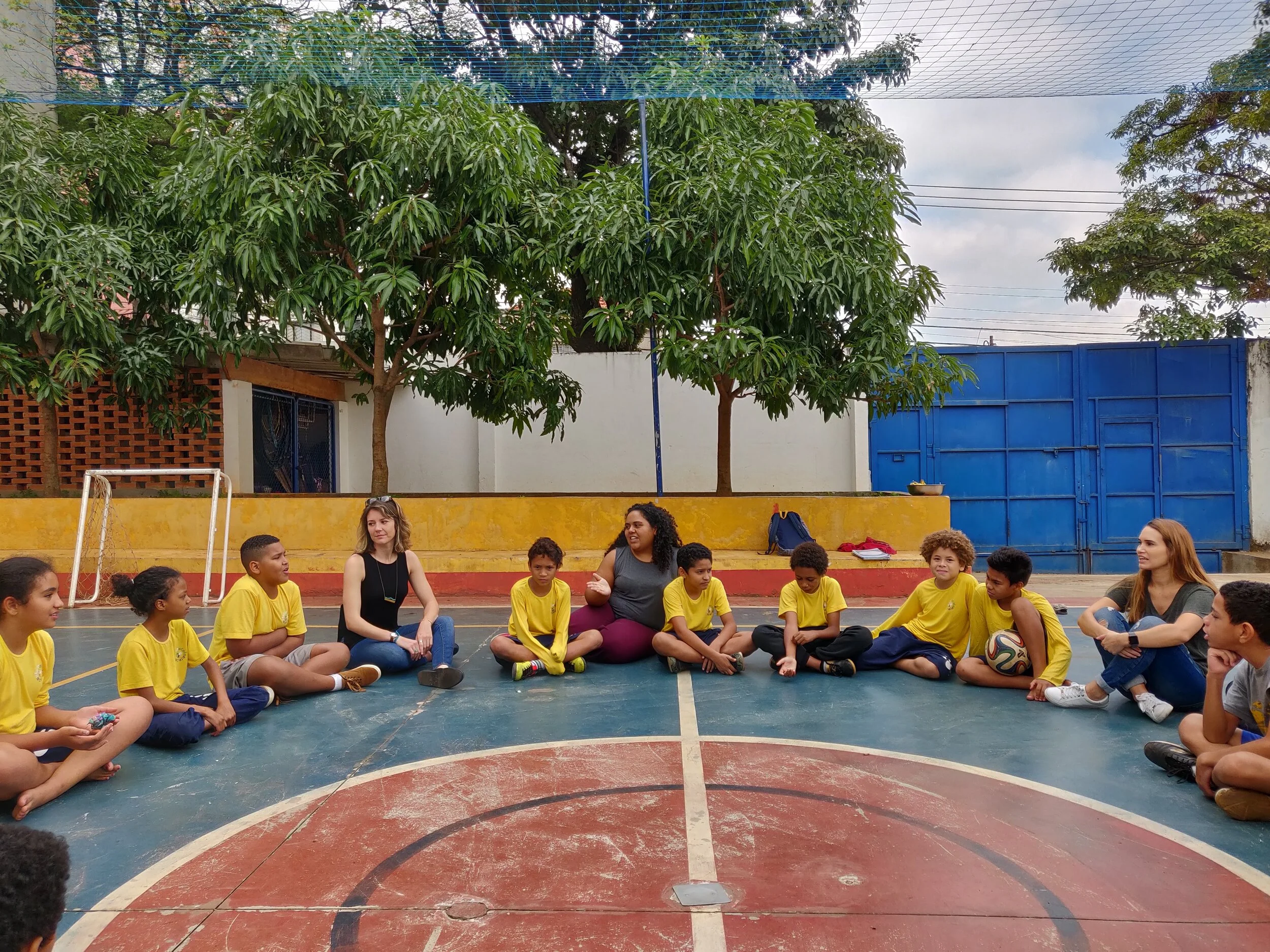
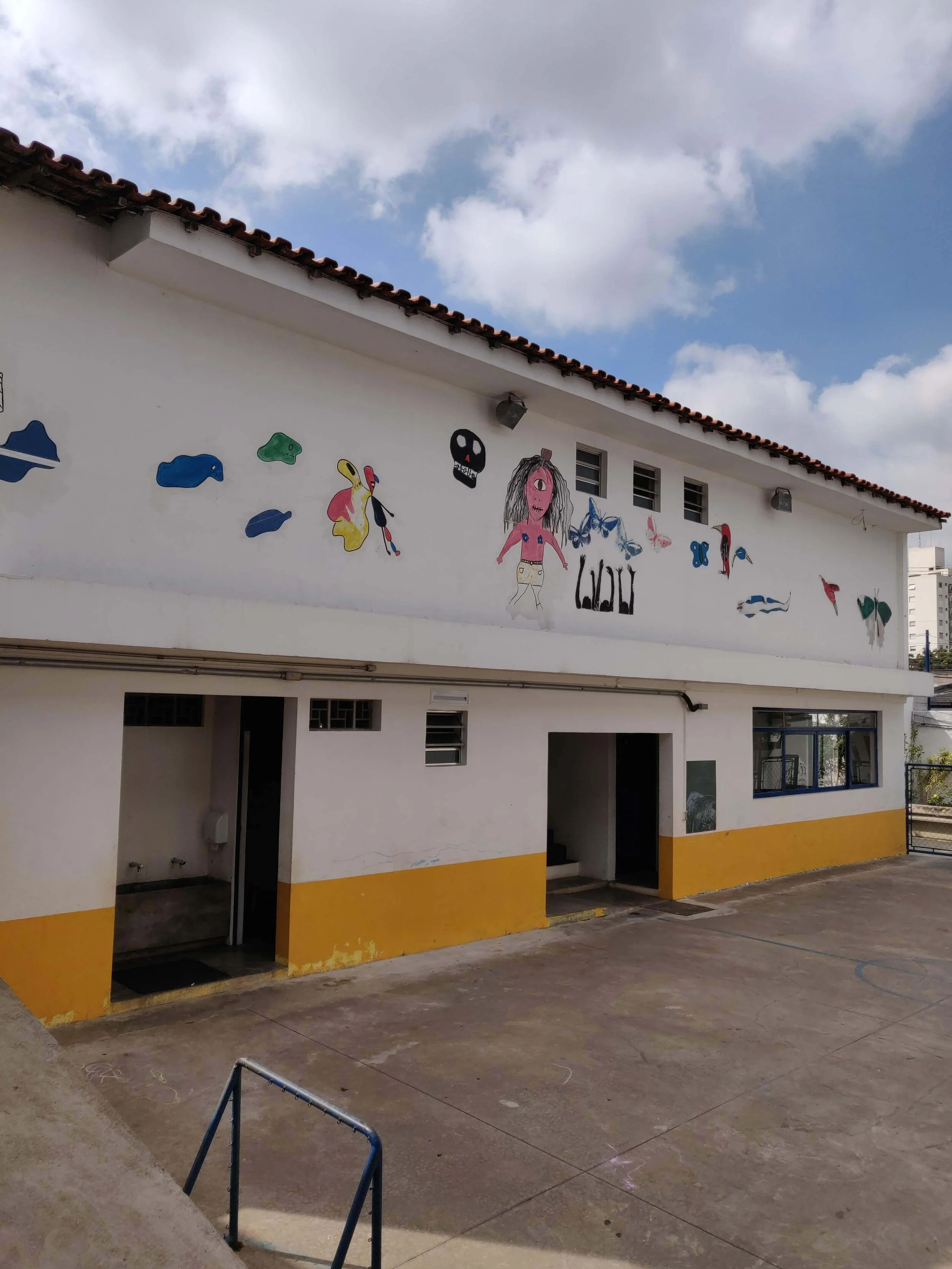
For conducting our international fieldwork, our MDes cohort (5 members) partnered with Ateliê Escola Acaia, an arts-based K–6 school in São Paulo, Brazil, to develop and facilitate a two-week workshop with fifth and sixth-grade students and teachers. The partnership was an opportunity to learn from innovative educational models addressing equity and access in education outside the U.S. context and to explore what happens when designers and young people investigate a deceptively simple question together: what can you see?
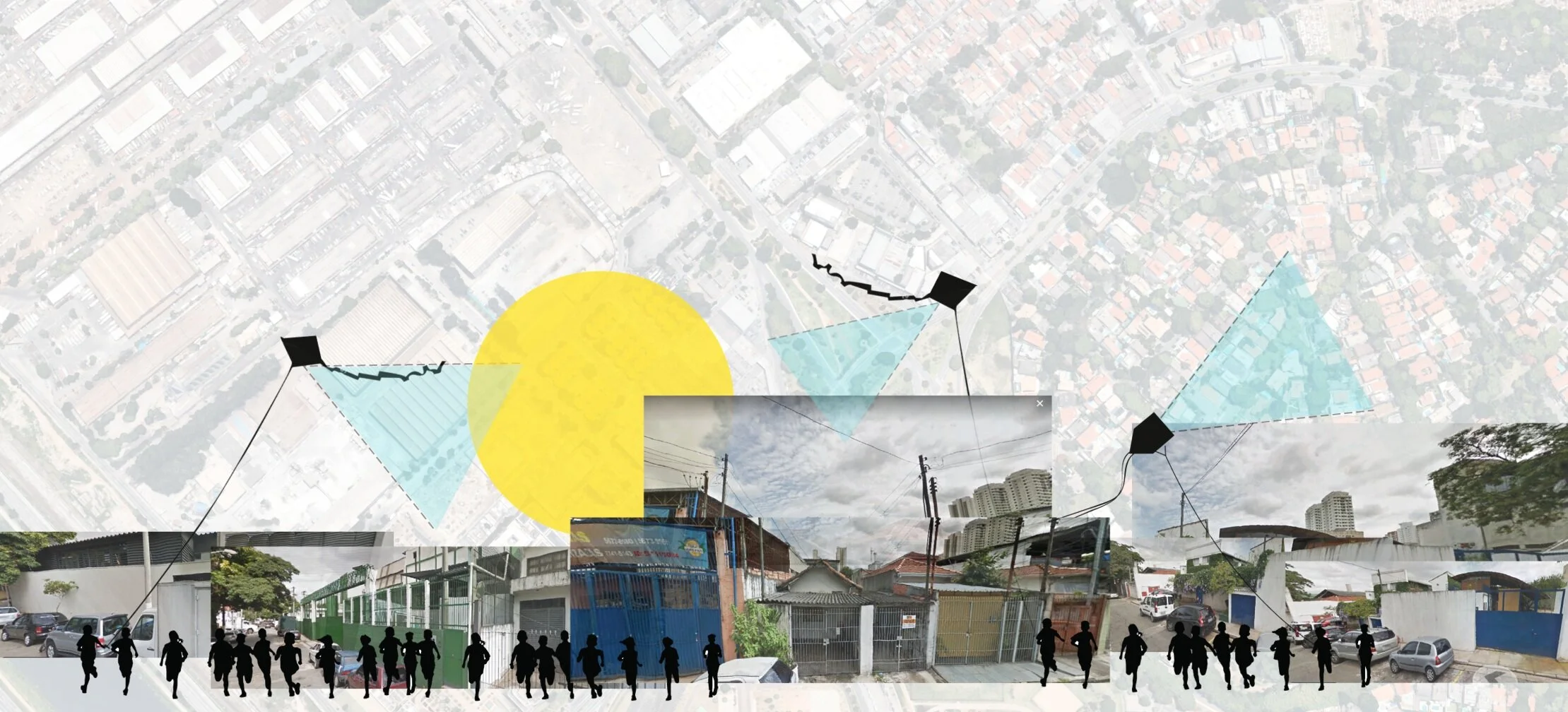
We centered the workshop on joint observation and playful exploration of everyday environments in and around the school, using unconventional tools: cameras attached to traditional Brazilian kites (pipa vista) and cameras strapped to shoes (pé da vista). These tools became a way to get to know one another across cultures and share different methods designers use to observe and make sense of the world around them.
Process
The residency unfolded over two weeks, each organized around a different scale of observation:
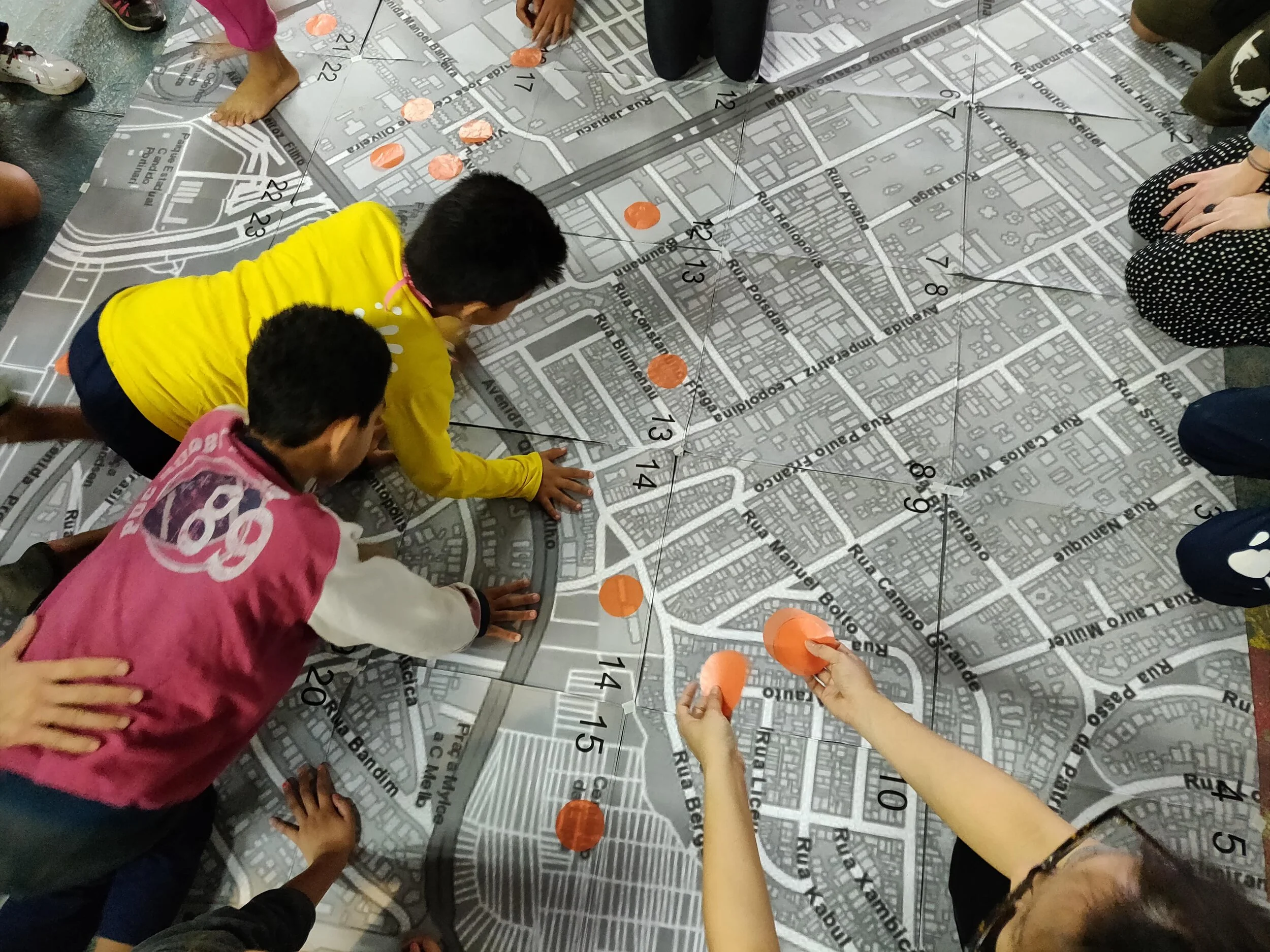
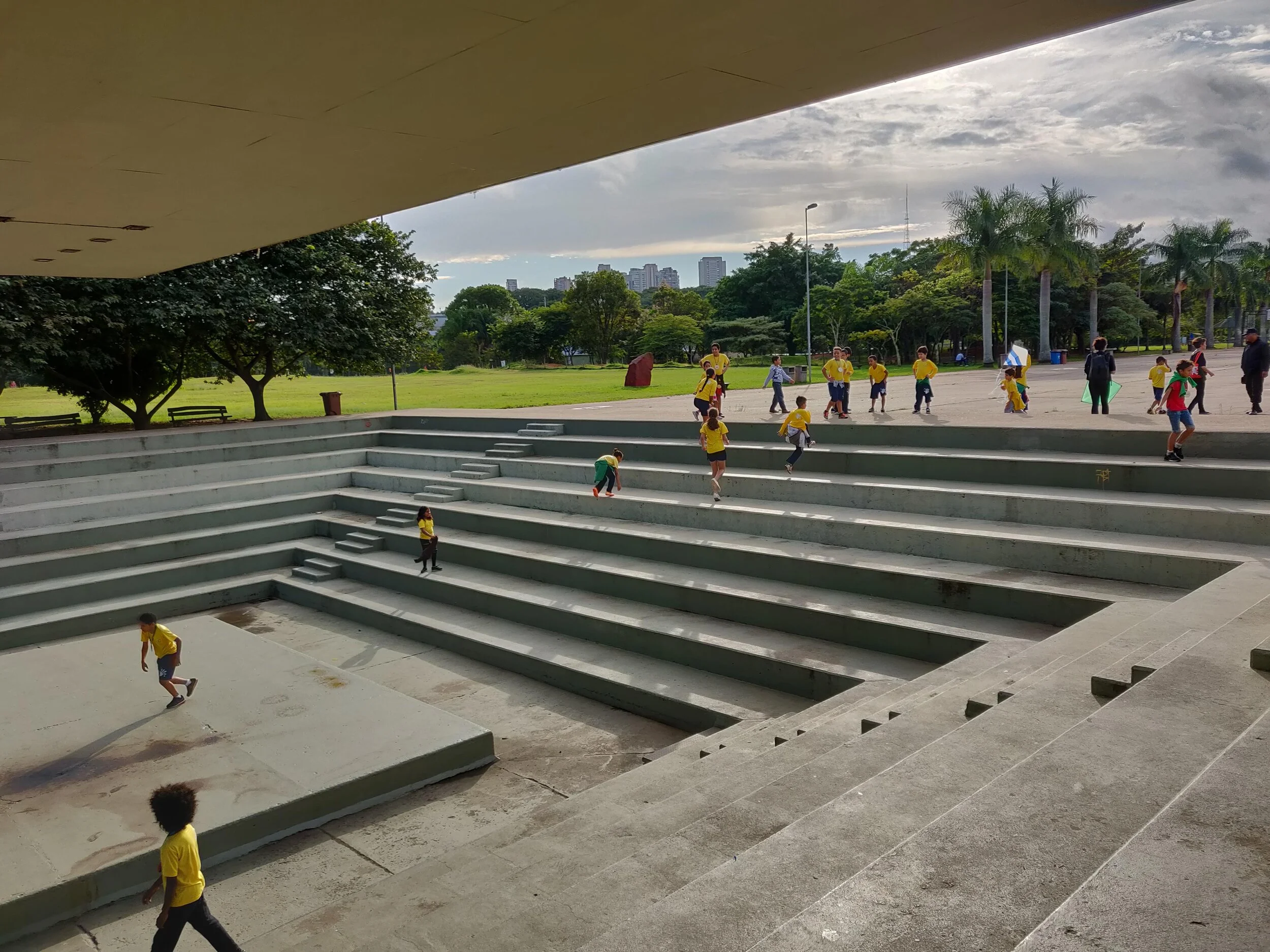
Week 1 — Pipa Vista (Kite View): We walked to the local park and flew traditional Brazilian kites with drone cameras attached. Students examined a map of the surrounding area and created new kites inspired by the spatial patterns within their section of the map. The pipa vista activity gave participants bird's-eye views of their neighborhood a perspective most had never encountered and opened conversations about how familiar places look entirely different from above.
Week 2 — Pé da Vista (Foot View): Students explored the school and surrounding streets with small cameras attached to their shoes. This ground-level recording created a radical contrast to the aerial views of Week 1. Students reviewed, selected, and edited their footage using Adobe Premiere Pro. The selected clips were compiled into a collaborative film representing the entire class's perspectives.
The power of the project was in the movement between scales; macro to micro, bird to ground, neighborhood to pavement crack and in giving students authorship over both perspectives.
Impact
The residency concluded with written and verbal reflection exercises, a celebratory exhibit of the students' kites, and a screening of the final pipa vista and pé da vista films. The project was presented at the International Seminar of Design Researchers at Anhembi Morumbi University in São Paulo.
Reflection
What we learned most was about our own designerly biases. Communicating top-down views like maps required more contextualization than we anticipated — we hadn't fully considered what symbolic representations like bird's-eye street views mean in a community where people navigate by asking directions and referencing physical landmarks. Meanwhile, the low-angle foot-camera shots we worried might be too abstract for young students turned out to be exactly what they were most curious about. What we assumed was uneventful, they playfully explored.
Our intention was never to make substantive contributions to Acaia's curriculum. But the designerly activities building kites, strapping cameras to shoes, changing how you physically look at a place facilitated something our partners kept emphasizing: cultural exchange as a catalyst for shifts in perspective. This was one of the first times I saw how shifting a physical perspective could shift a conceptual one. The students didn't just see their neighborhood differently through the kites they started talking about it differently. That connection between embodied experience and expanded understanding has influenced how I design workshops and research activities since.