Role: Prototype Co-Designer, Evaluation Co-Designer
Timeline: Jan - Apr 2019
Location: University of Michigan; Science Central, Fort Wayne, IN
Built on: Sean Ahlquist's research on social sensory structures
Methods: Behavioral observation, Rapid prototyping, Participatory evaluation, Processing (interactive interface)
Output: 2 tensile structure designs, 2 interactive interfaces, Installation and user evaluation at Fort Wayne
About
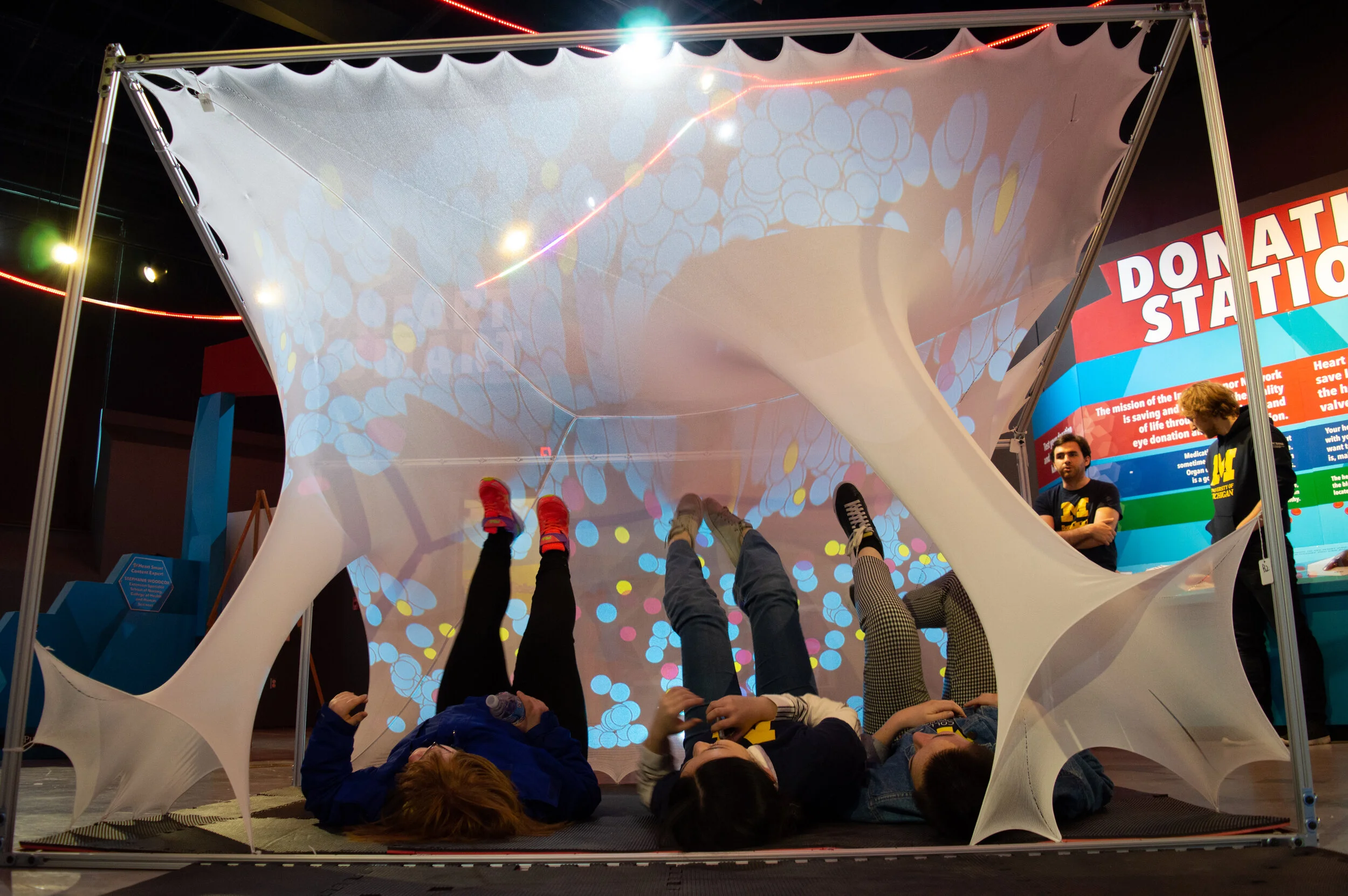
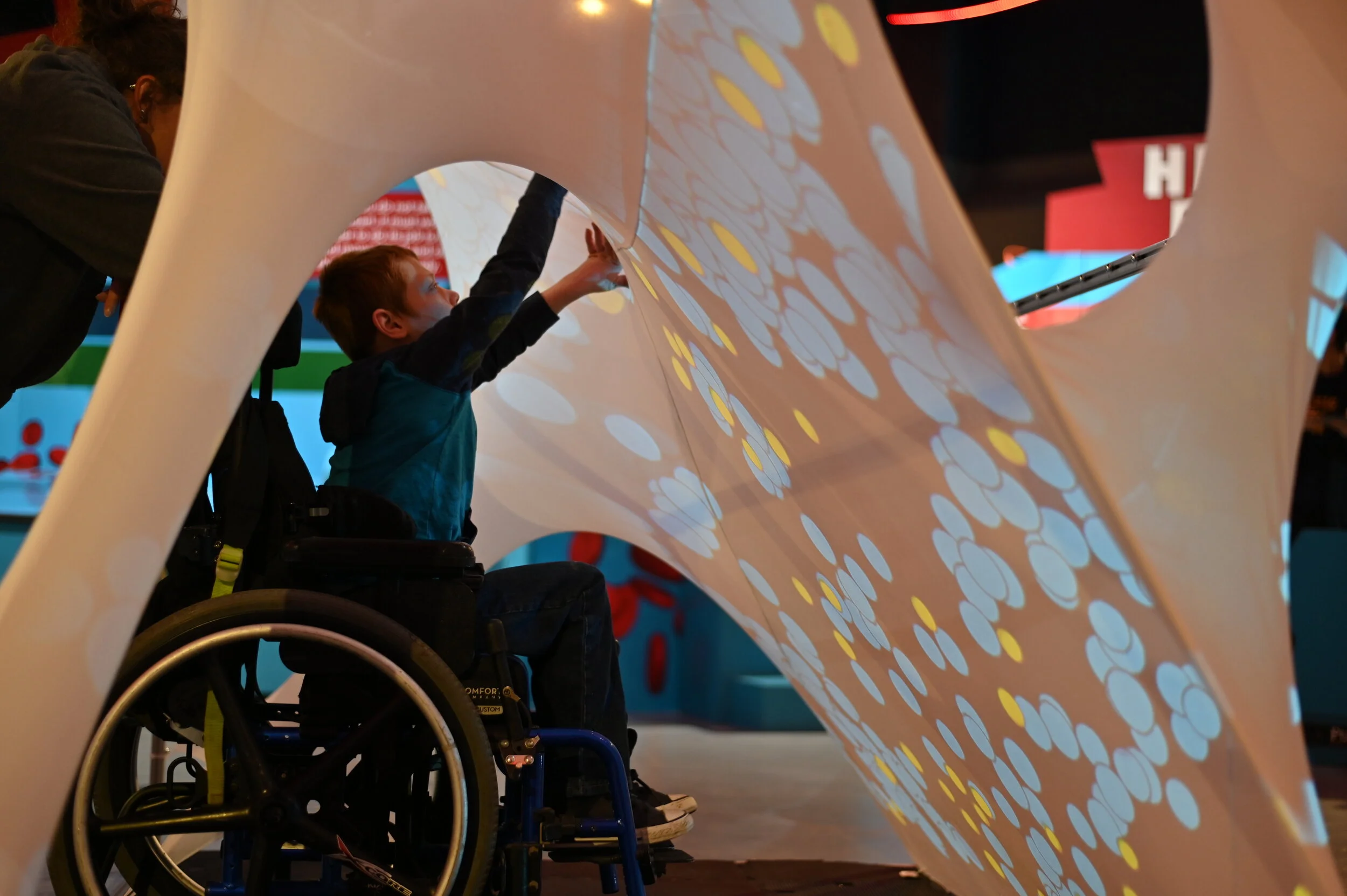
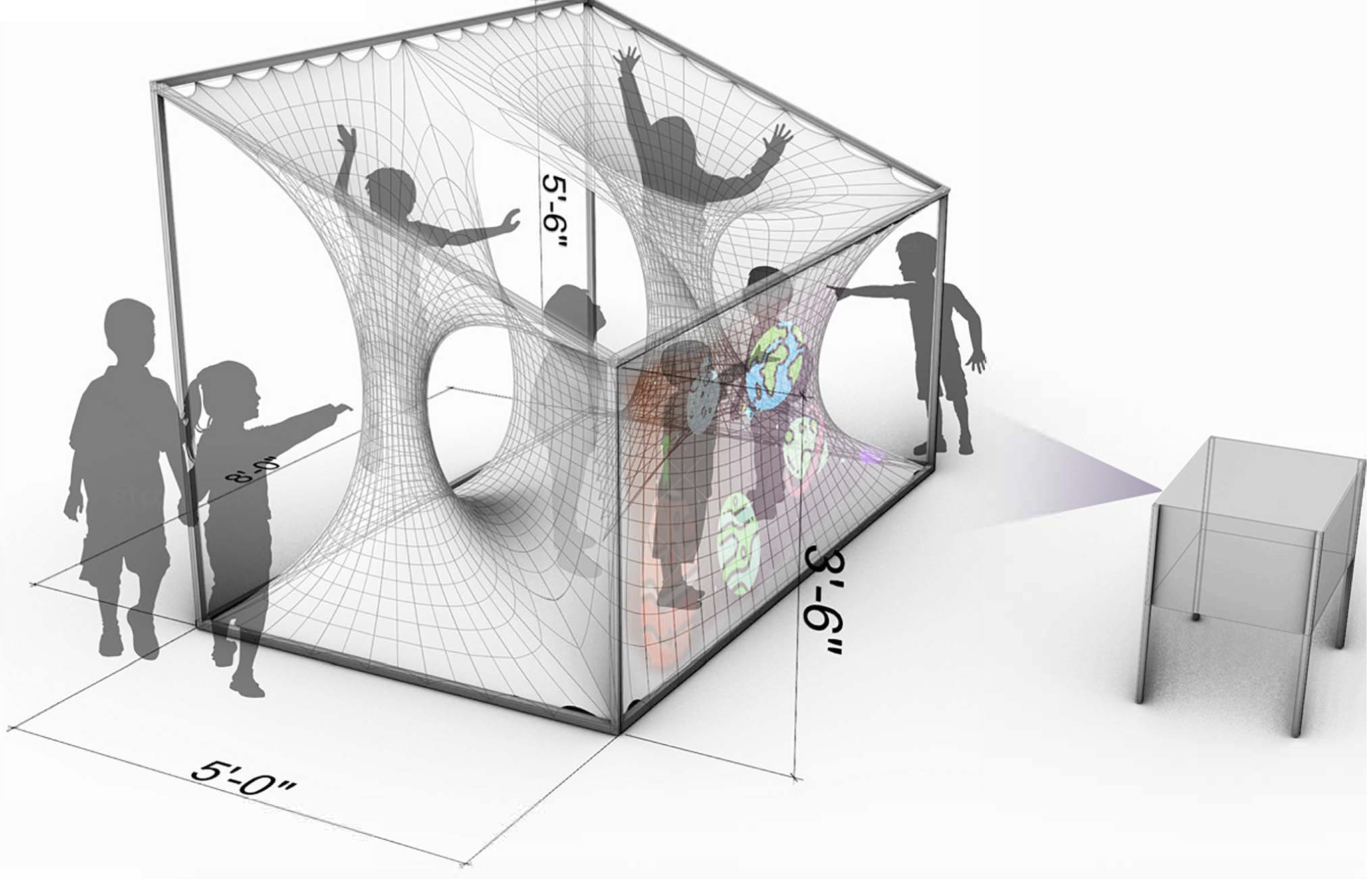
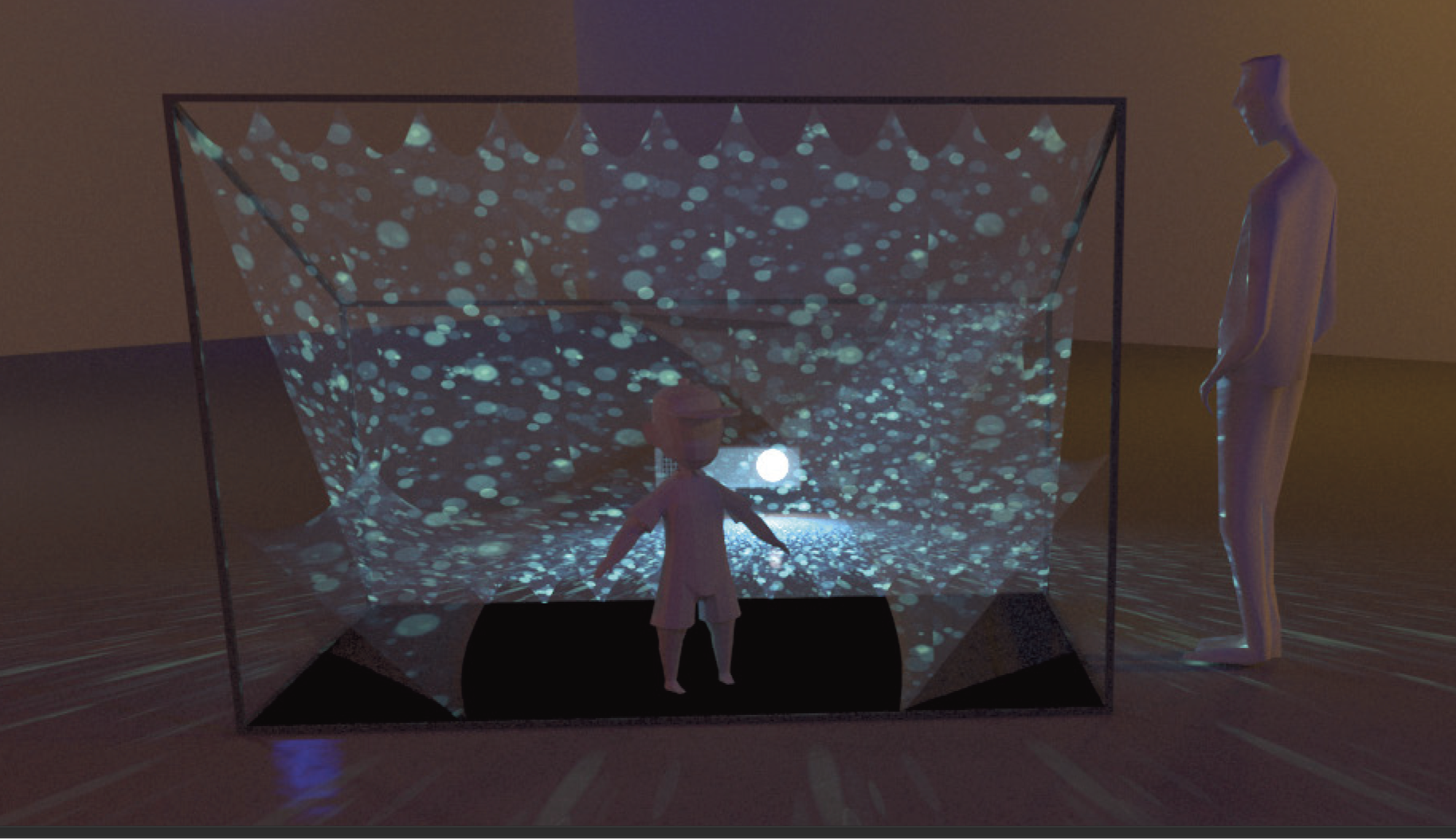
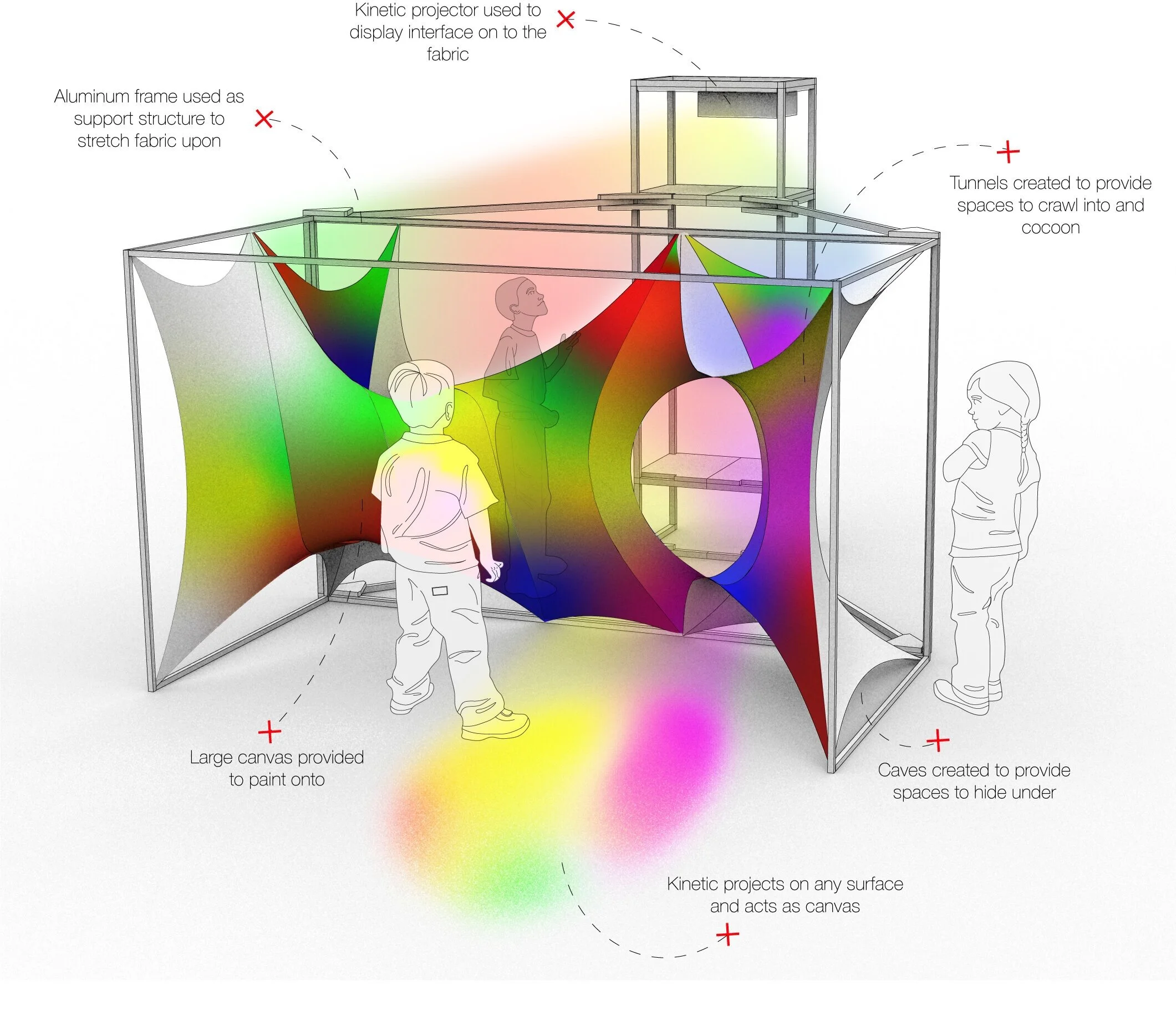
This project was part of an elective seminar building on Sean Ahlquist's ongoing research on social sensory structures; textile-based playscapes designed to create beneficial tactile environments for children with Autism Spectrum Disorder (ASD). These are tensile architectural installations where the fabric surface itself becomes an interactive interface, responding to touch and movement in ways that can support therapeutic play and sensory regulation.
The seminar's objective went beyond making and prototyping. We were tasked with testing, evaluating, and generating findings that would inform further iterations of the research. Observation and field study were the core methods.
Contribution
I worked within a small interdisciplinary group on two fronts: designing and fabricating the tensile architecture prototypes, and co-developing the evaluation framework used to assess how children interacted with the structures in the field.
Process
Literature and collaborative learning: We studied ASD research, tensile structures, behavioral mapping, spatial design, and therapeutic play approaches — individually first, then through group discussions that built shared understanding across our different disciplinary backgrounds.
Field observation: A visit to Science Central in Fort Wayne, Indiana to observe existing prototypes in use with children. Watching real interactions surfaced considerations that literature alone could not — how children approached the structures, what drew them in, what made them hesitate, where the design assumptions broke down.
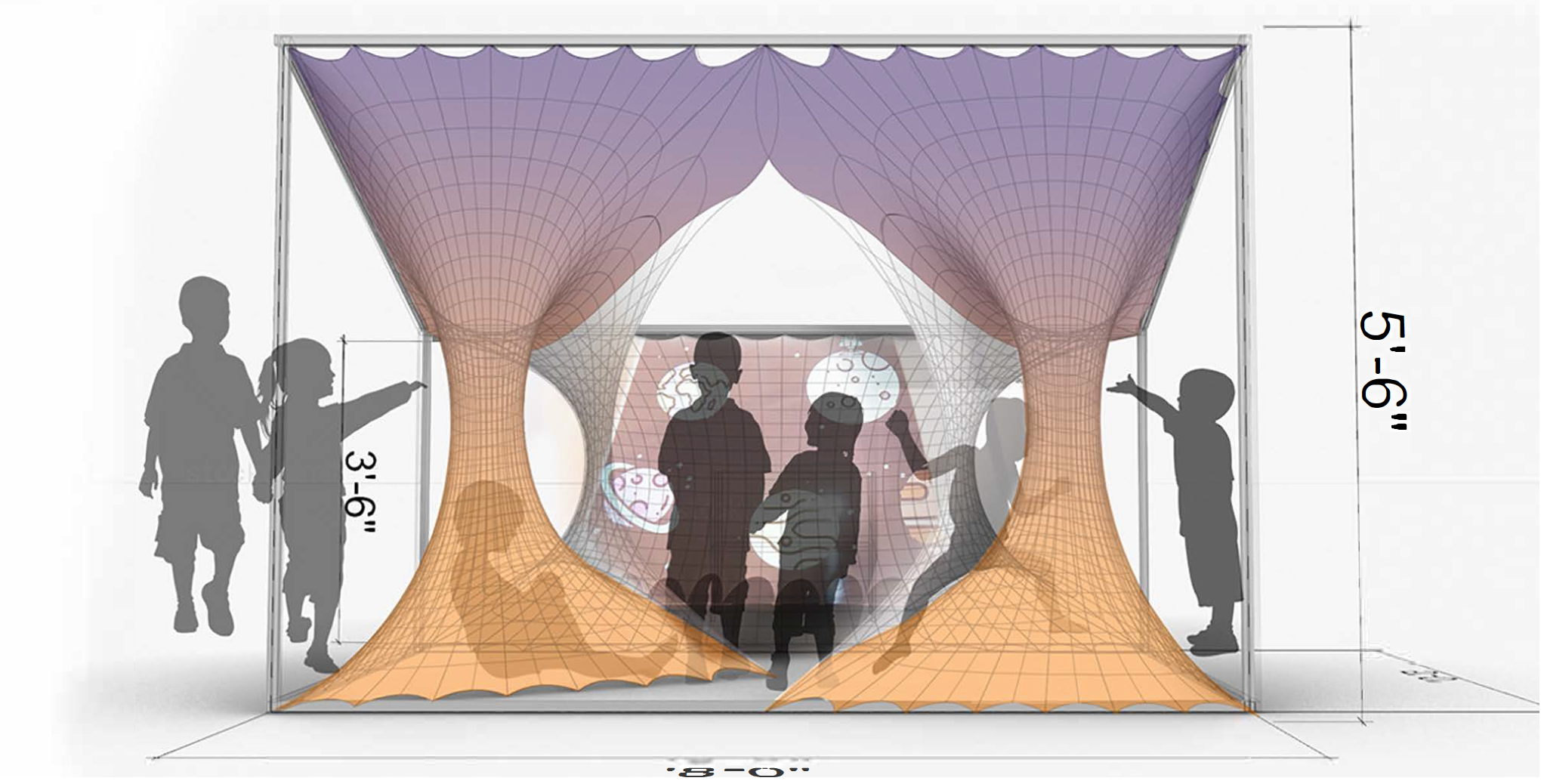
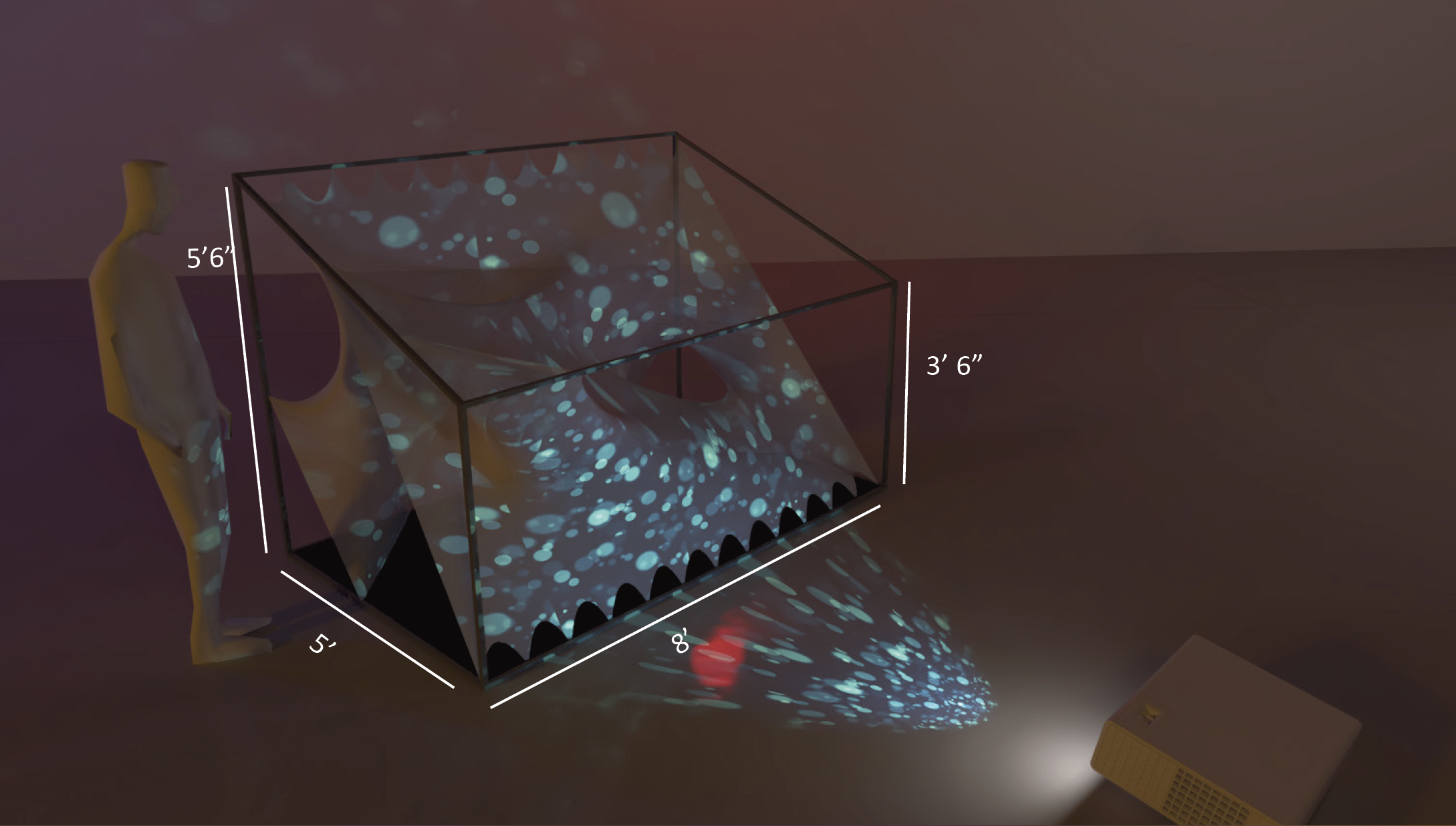
Prototyping: Working in groups of three, we modeled cylindrical topologies in spring form and built scaled versions, testing how computational models translated onto fabric — spandex and CNC knit. The objective was gaining familiarity with the full pipeline from digital modeling to material realization, and understanding the structural and sensory properties of each material at scale.
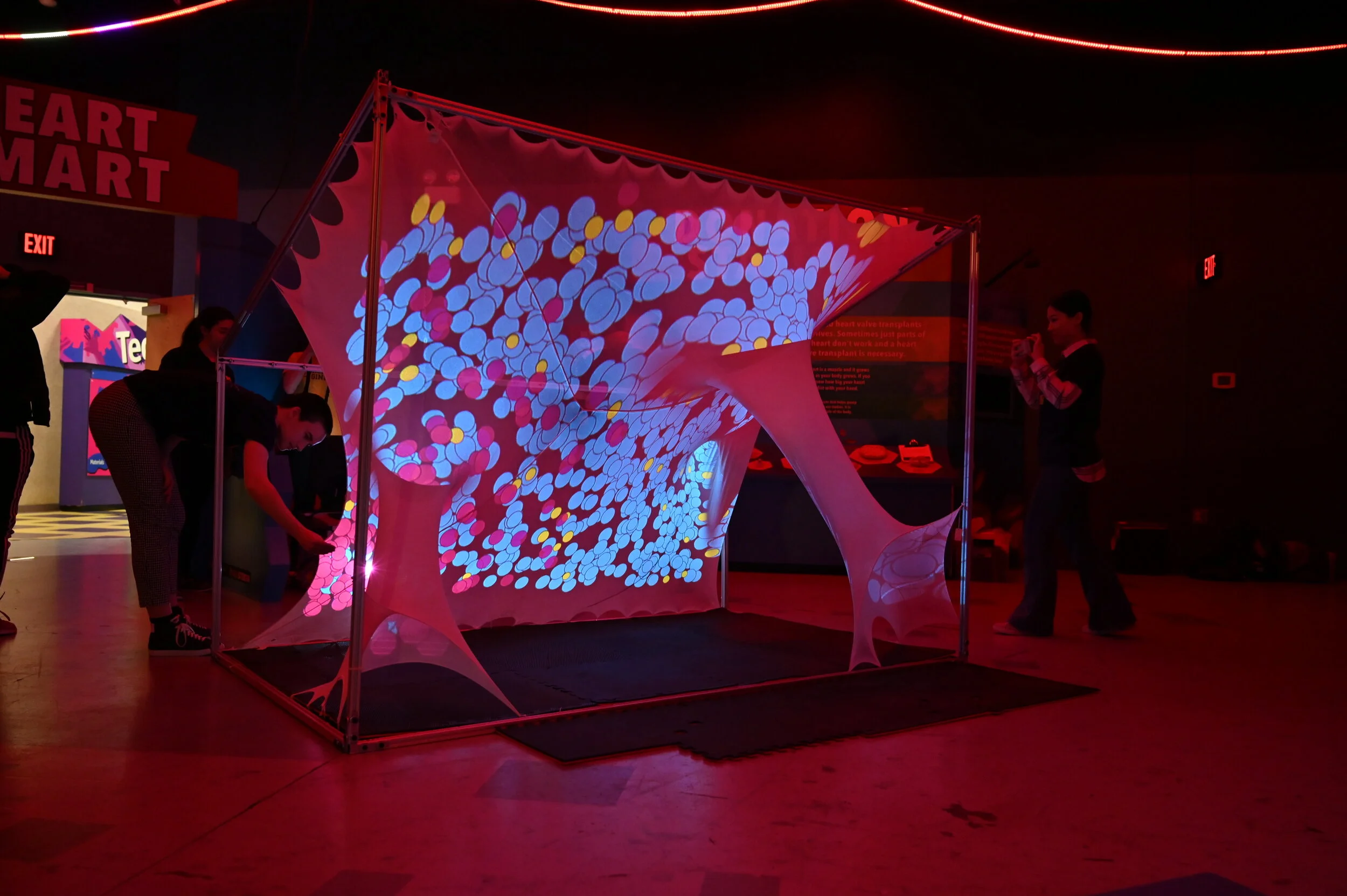
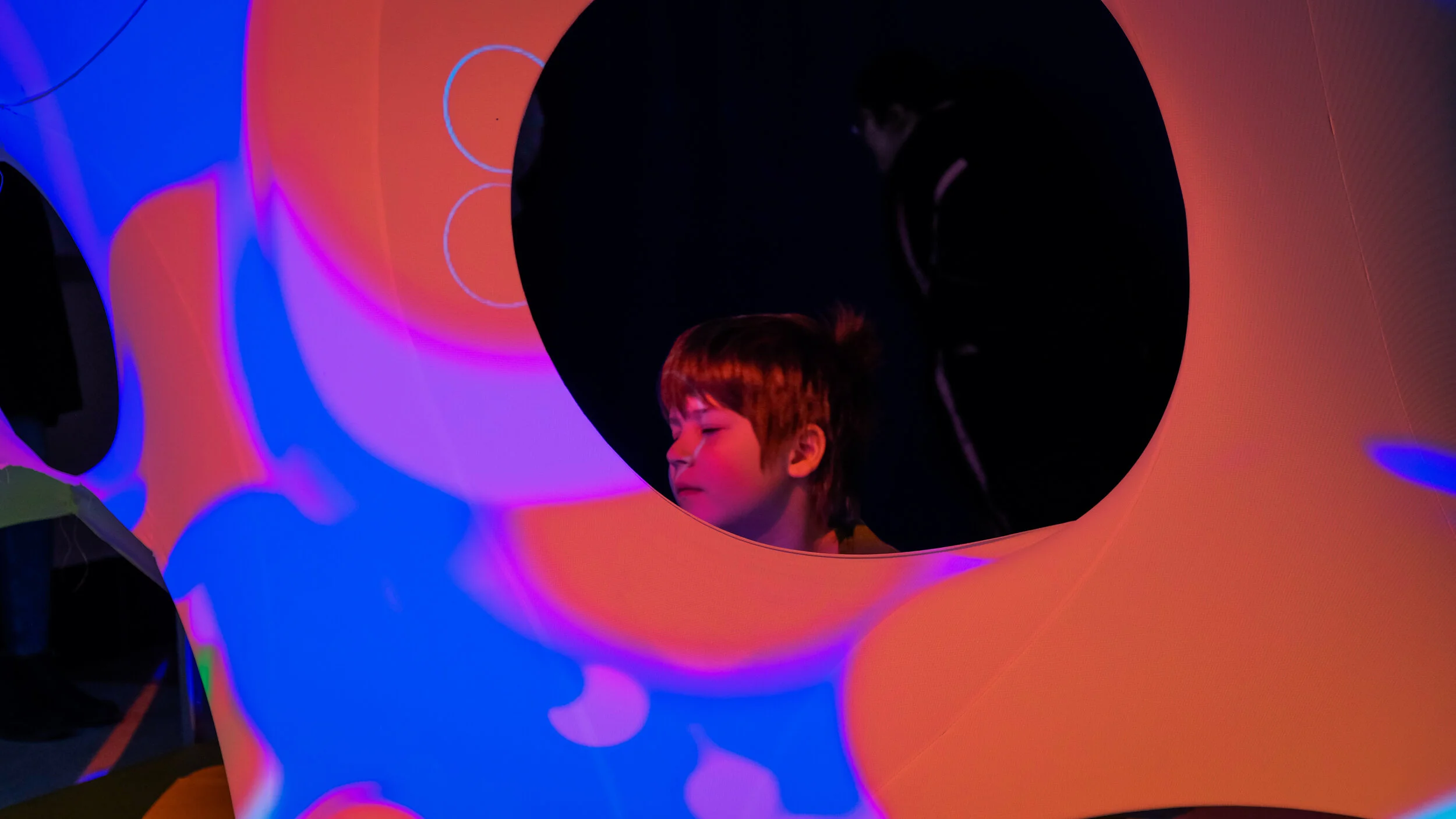
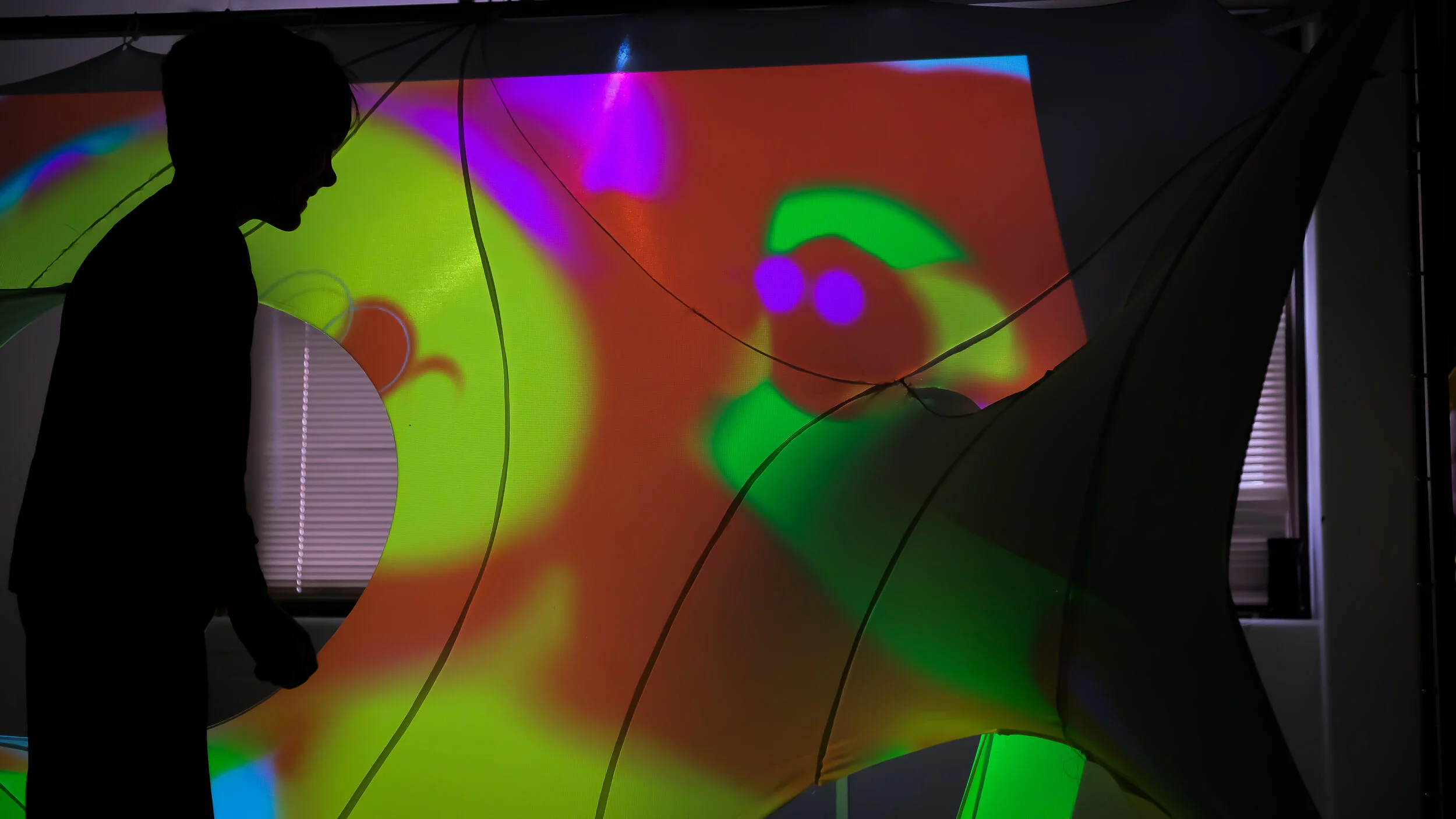
Interface development: Using Processing, we developed interactive graphical interfaces that responded to children's touch and movement on the textile surfaces. We storyboarded the interactions before building the graphical elements — mapping intended sensory experiences to visual feedback.
Final installation and evaluation: Two distinct tensile structure designs, each with two interfaces, with intentional differentiation between the affordances of interaction. The prototypes were installed and evaluated at Science Central in Fort Wayne, where we observed how children with ASD engaged with the structures in real time.
Impact
The field evaluation provided direct observational data on how children with ASD engaged with the tactile environments; what invited exploration, what overwhelmed, and what sustained attention. Both successes and failures from testing informed modifications to the physical structures, the interactive interfaces, and the evaluation methodology for future iterations of Ahlquist's research.
Reflection
Designing for children with ASD means you can't assume your design intentions will match the child's experience. What we observed at Fort Wayne changed our prototypes more than any studio critique could have — evaluation wasn't an afterthought, it was the design method. I've carried that forward into how I approach participatory work since.