Role: Illustrator
Timeline: 2020
Location: Washington, D.C.
Collaborators: Jenn Low (project lead), Megan Lewin-Smith, Throneless Tech, Garima Sharma, Jelani Byrd
Output: illustrations, animation frames for platform launch
About
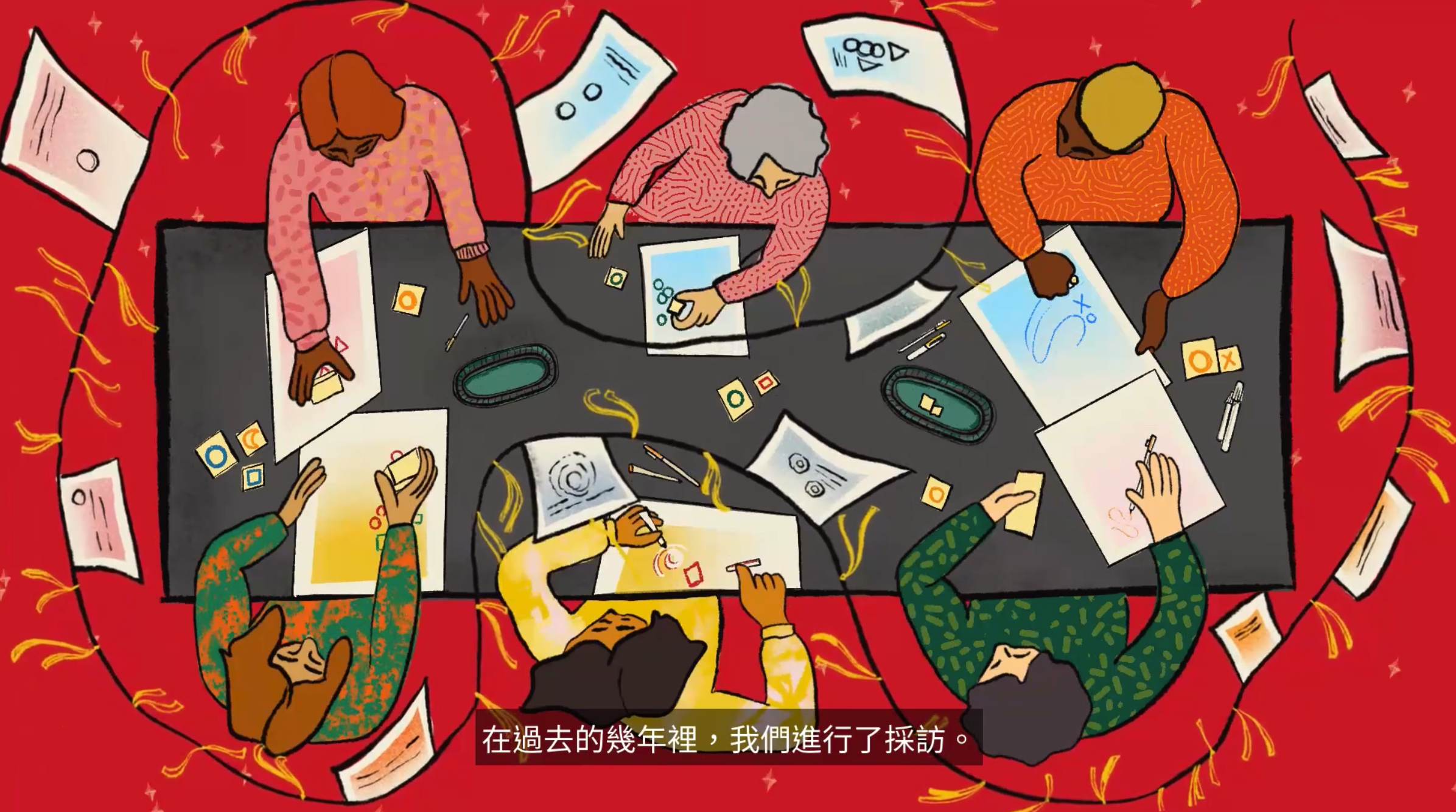
The Dear Chinatown, DC Mapping Project is an interdisciplinary collaboration that grew out of Jenn Low's MDes thesis at the University of Michigan. In partnership with the 1882 Foundation and supported by the 2020 AARP Community Challenge Grant, the project compiled responses and memories from community poster-making workshops and survey activities into an interactive online platform.
The platform captures the perspectives of D.C.'s Chinatown from the history and viewpoints of its longtime community members particularly the neighborhood's aging residents, whose social and public infrastructure has become increasingly inaccessible due to rapid development. Advocates can use the tool to inform urban planning policies and push for community priorities in redevelopment efforts.
Process
My work focused on creating a visual language that could hold two things at once: warmth and cultural resonance for longtime Chinatown residents, and clarity of civic purpose for funders, planners, and a broader D.C. audience. Specifically, I:
Created illustrations reflecting the community's cultural history and neighborhood identity
Produced animation frames for the project's public launch materials
Collaborated closely with Jenn Low (project lead) on the overall visual storytelling approach
Impact
The platform launched as a beta tool for increasing civic engagement and strengthening community identity. It has been used by advocates to inform conversations around redevelopment, and the project was covered by the Stamps School of Art & Design.
Reflection
This project taught me that visual communication in civic contexts is an act of translation. The illustrations needed to make longtime residents feel seen while making the project legible to people with very different relationships to the neighborhood. That tension between intimacy and legibility shows up in a lot of my work.