Role: Lead Research Assistant
Timeline: Jan - Aug 2019
Location: University of Michigan
Team: Dr. Omar Sosa-Tzec (PI), Evan Sobetski, Sylia Sinsabaugh
About
This research tests the Design Delight framework comprising five experiential qualities: surprise, vitality, cuteness, serendipity, and reassurance; that designers can intentionally compose to provoke moments of significant positive affect during the user experience. The framework draws on the expectancy disconfirmation paradigm: a user experiences delight when actual experience exceeds expectations. Design Delight extends this by arguing that surprise is one of several experiential qualities that produce delight, not the only one.
The framework regards an artifact as the integration of multiple components - visual, verbal, aural, olfactory, tactile, and temporal; each the outcome of intentional decisions by the designer. Delightful experiences, in this view, are not accidents but the result of thoughtful composition.
Contribution
I contributed to the development of artifacts embodying one or more experiential qualities, the analysis of artifacts across design fields, and the design and documentation of three applied objects.
Process
After developing the framework through analysis of analog, digital, tangible, and intangible artifacts across graphic, product, and service design, we applied it to a specific context: supporting wellbeing for people coping with chronic conditions.
Three artifacts were designed:
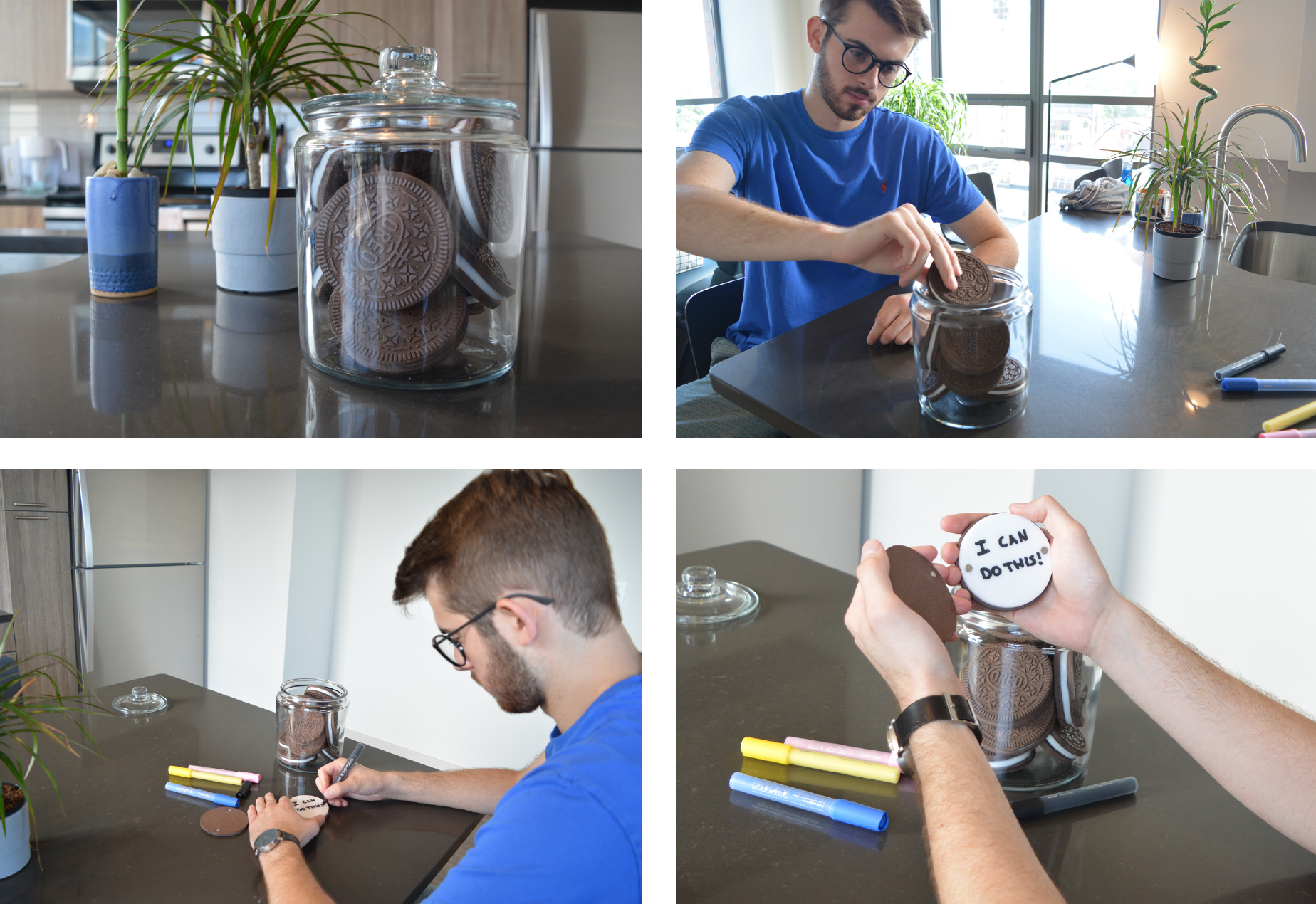
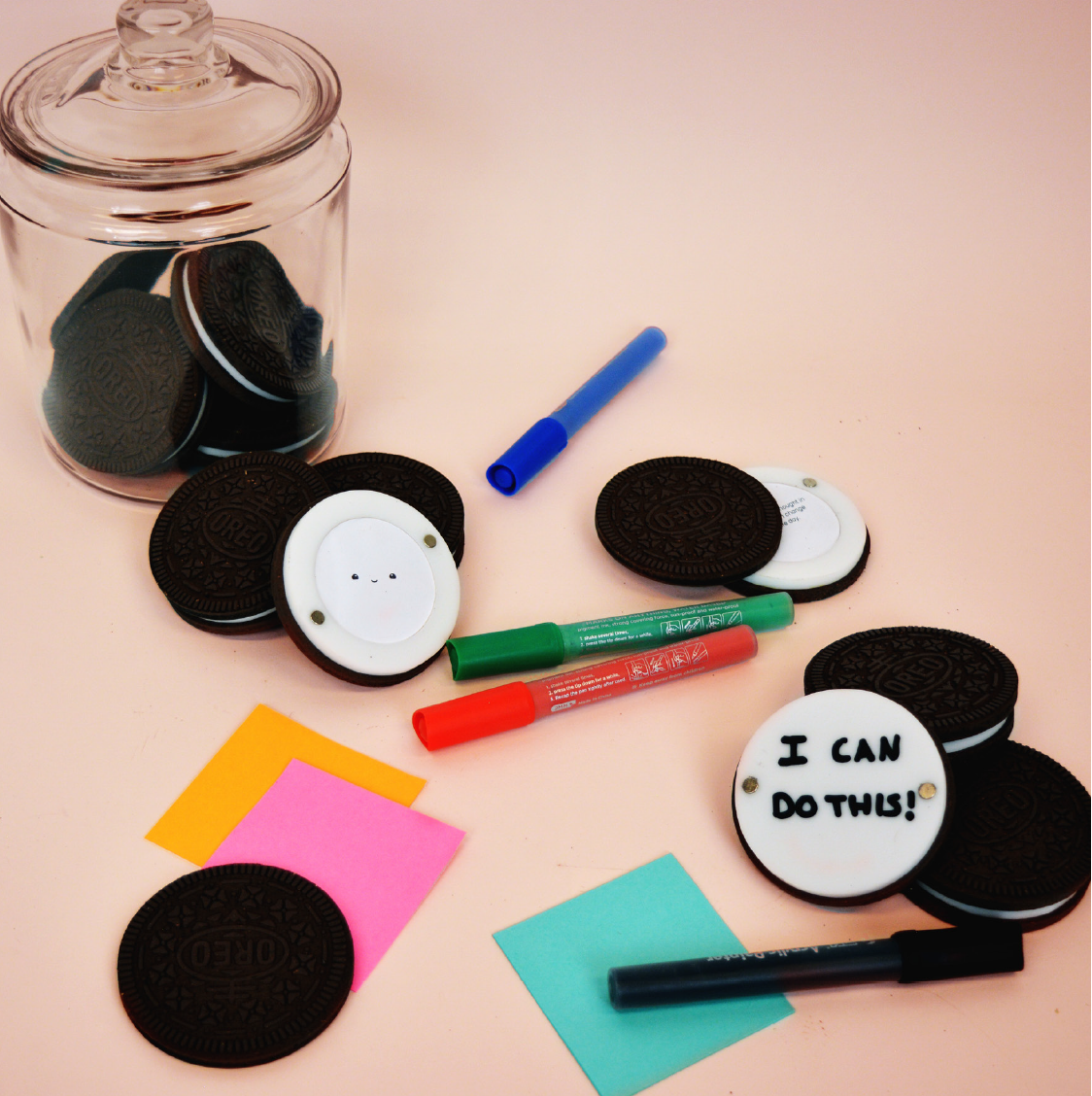
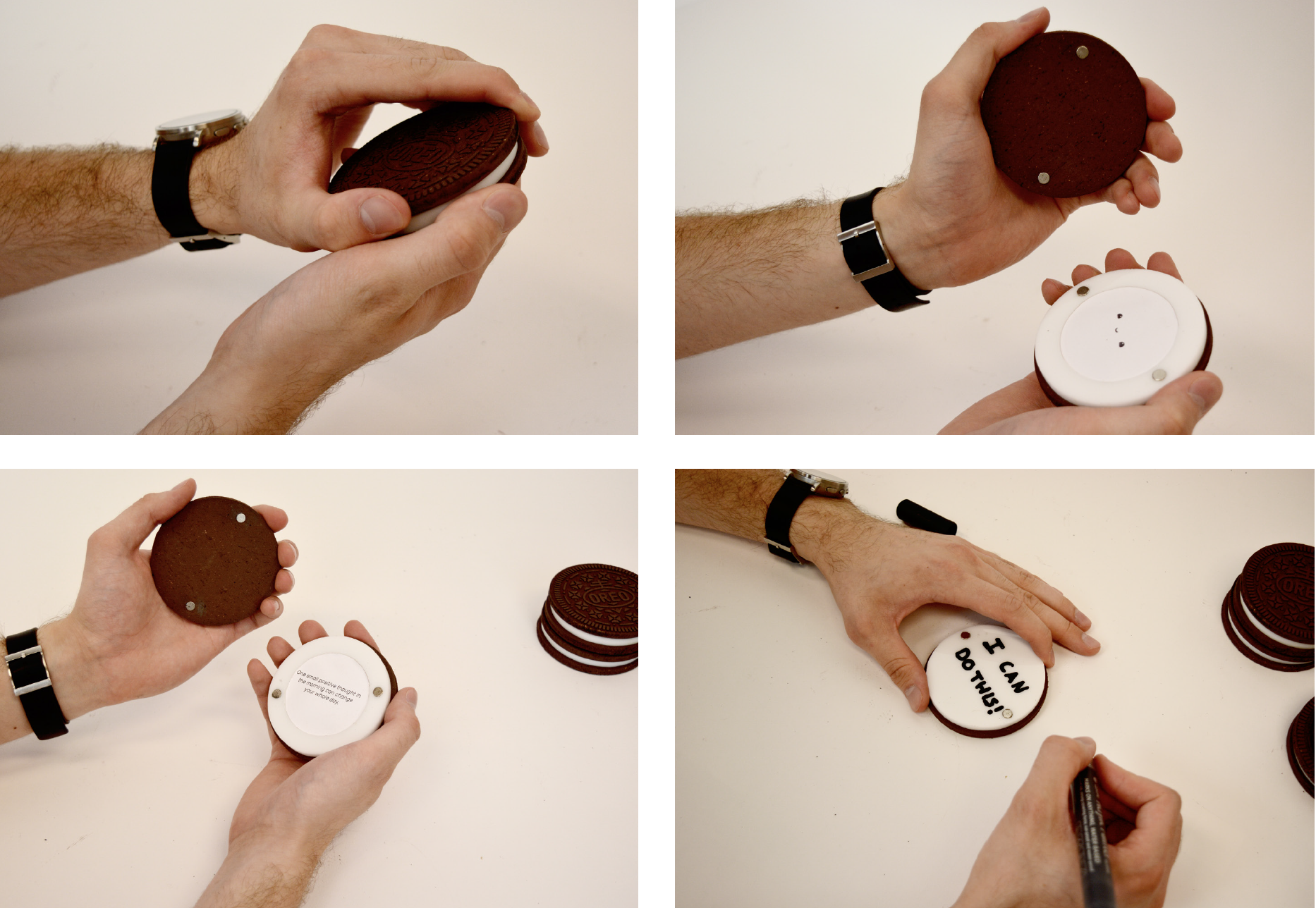
Cocoa-Cheer Cookie: An artificial chocolate cookie that delivers a moment of joy and encouragement. Different cookies reveal photographs of loved ones, cheerful faces, quotes from people in similar situations, or blank surfaces for the user to fill in themselves. The design gives agency while providing warmth and surprise; some cookies become gifts of kindness between people.
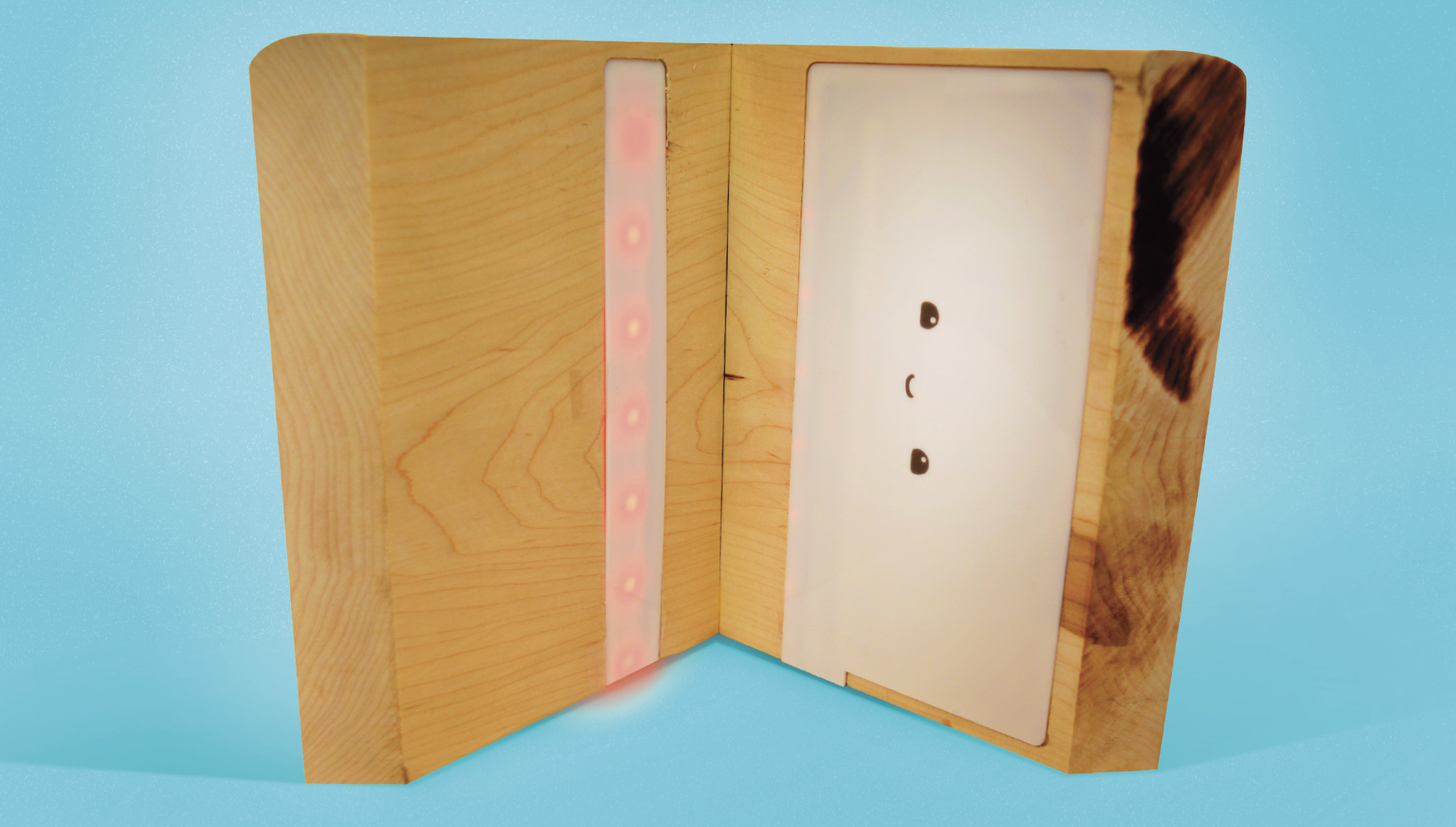
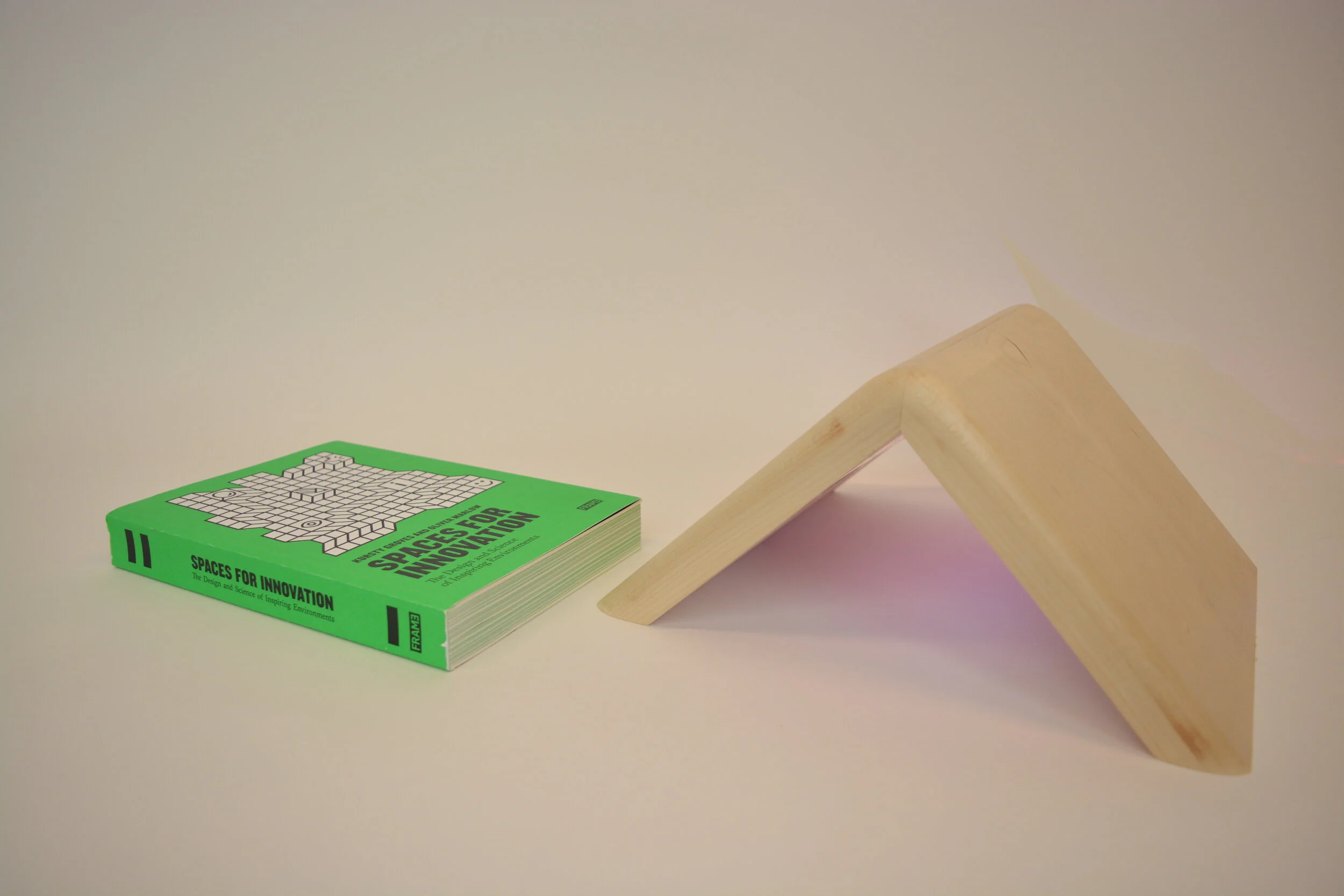
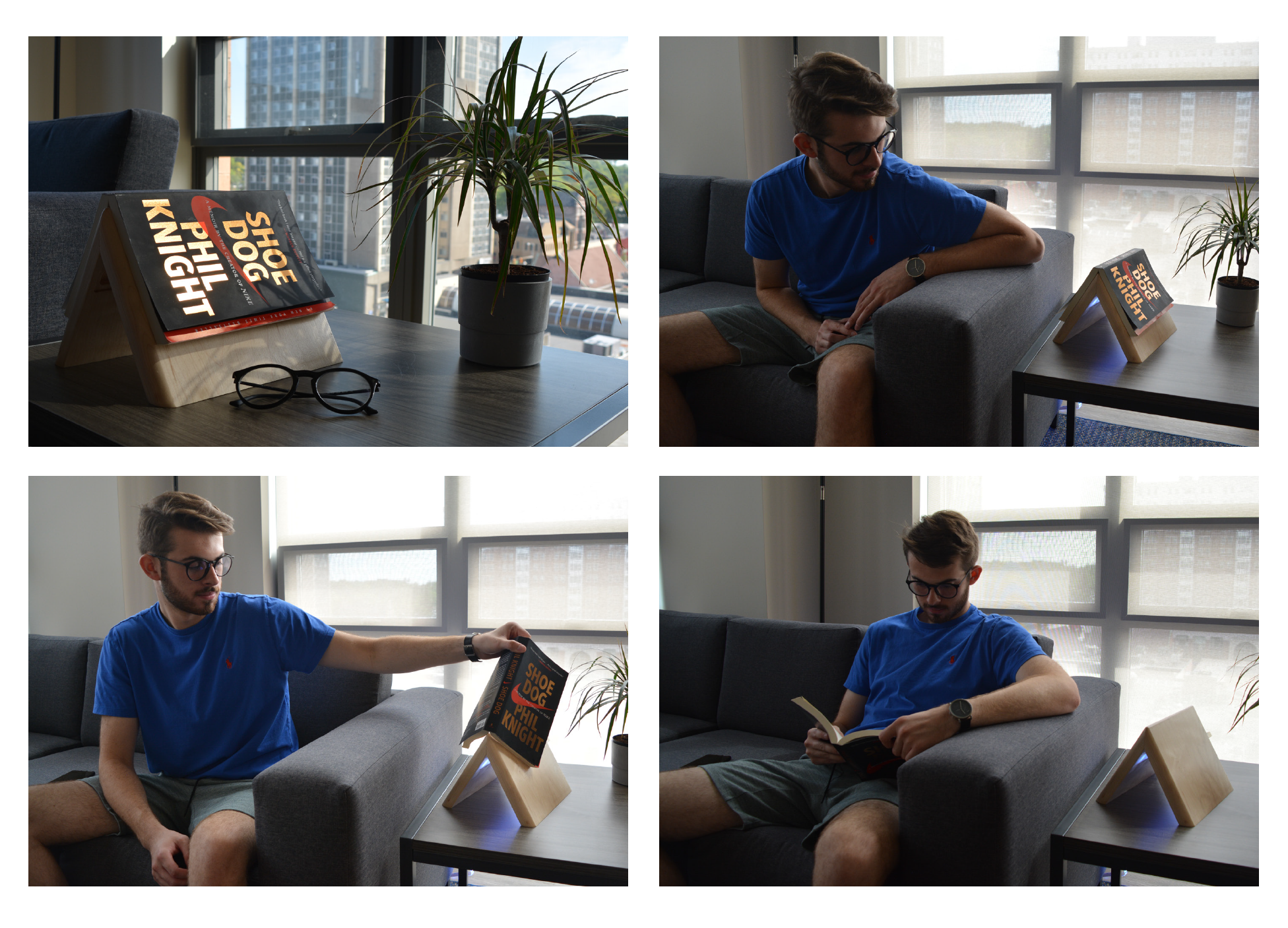
Hey-U Bookshelf: An interactive bookshelf supporting connection between two physically distant people through shared reading. Hey-U senses a book's weight to track reading periods, communicating through light patterns that let each person know the other is reading. A small expressive face element transforms a functional object into a kind of electronic companion, emphasizing relational connection over utility.
Pilly-Eggy: A third artifact in the series supporting daily wellbeing routines. An interactive pill container designed to support someone recently diagnosed with HIV as they begin a new medication regimen. Intended for private spaces like a bedroom or bathroom, Pilly-Eggy uses a cute face and colorful light patterns to celebrate adherence and shows discontent when medication is neglected. The goal is to develop an affective relationship with the user, acting as a small companion that makes a difficult routine feel less isolating.
Impact
The framework and artifacts were published at the International Conference on Human-Computer Interaction (HCII 2021). Design Delight offers a vocabulary for designers to move beyond surprise as the sole driver of positive experience and intentionally compose for a richer range of experiential qualities.